
Maths
Maths at SMFR
At St Mary’s Farnham Royal, we take great care in the teaching of mathematics from EYFS through to Year 6 and preparing children for every stage of their learning. Our emphasis is to ensure that all our pupils are able to make rich connections across mathematical ideas to develop fluency and mathematical reasoning. Maths is essential to everyday life, critical to science, technology and engineering, and necessary for financial literacy and most forms of employment. We are committed to encouraging our pupils to apply their mathematical knowledge and skills confidently in other subjects and areas of their lives in a range of different contexts. We believe that all children are mathematicians and we want our pupils to enjoy mathematics, to be confident mathematicians, experience success in the subject, to show curiosity and an appreciation of the beauty and power of mathematics.
We aim to equip pupils with the tools to understand Maths. These tools include reasoning, problem-solving and the ability to think in abstract ways. Mathematics is integral to all aspects of life; with this in mind, we strive to ensure that our children develop a healthy and enthusiastic attitude towards mathematics that will stay with them and support them in the next stage of their education and beyond. At each stage of learning, children are actively supported to reach their full potential as mathematicians.
The National Curriculum for mathematics aims to ensure that all pupils:
- become fluent in the fundamentals of mathematics, including through varied and frequent practice with increasingly complex problems over time, so that pupils develop conceptual understanding and the ability to recall and apply knowledge rapidly and accurately.
- reason mathematically by following a line of enquiry, conjecturing relationships and generalisations, and developing an argument, justification or proof using mathematical language
- can solve problems by applying their mathematics to a variety of routine and non- routine problems with increasing sophistication, including breaking down problems into a series of simpler steps and persevering in seeking solutions.
Subject Aims
The basis for each year groups' work is found in the National Curriculum for Maths. Teachers will use a wide range of resources, including those that support children to visualize problems and the number system; resources to support understanding of place value; Computing including interactive resources; real life objects and scenarios. In Maths lessons, children will have the opportunities to participate in; the practical use of resources to develop understanding of key concepts; activities to develop fluency; problem solving including in real life contexts; exploring different possibilities in open ended investigations; Activities to develop Maths language/ vocabulary and ability to explain their thinking.
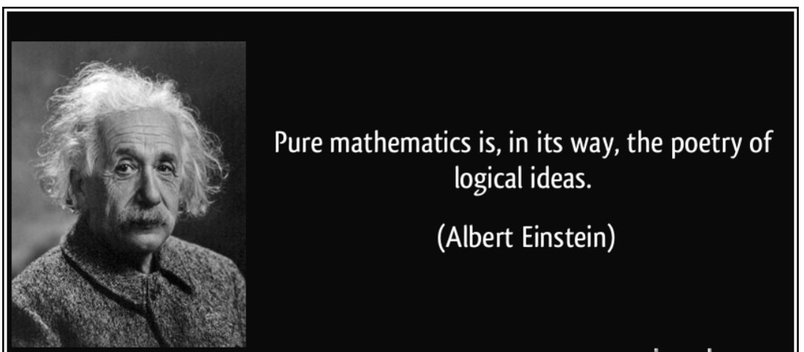
Mathematics is essential to everyday life, critical to science, technology and engineering, and necessary for financial literacy and most forms of employment. A high-quality mathematics education therefore provides a foundation for understanding the world, the ability to reason mathematically, an appreciation of the beauty and power of mathematics, and a sense of enjoyment and curiosity about the subject.