PHSE & Relationships Education
PSHE at SMFR
The teaching of PSHE (including Relationships and Health Education), is an important aspect of a child’s education. At SMFR, PSHE includes planned topics which inform children honestly and age appropriately about their bodies and relationships. PSHE aims to help children make healthy choices as they grow up and understand the importance of caring and loving families and relationships, so that they can live happily within a wide diverse society. We consider that Relationships Education and Health Education is an integral part of the Personal, Social and Health Education (PSHE) and Citizenship curriculum, and links naturally to other curriculum areas such as Science and RE. This policy reflects the requirements of the DfE statutory guidance for Relationships Education, Relationships and Health Education which details what pupils should know by the end of primary school.
Subject Aims
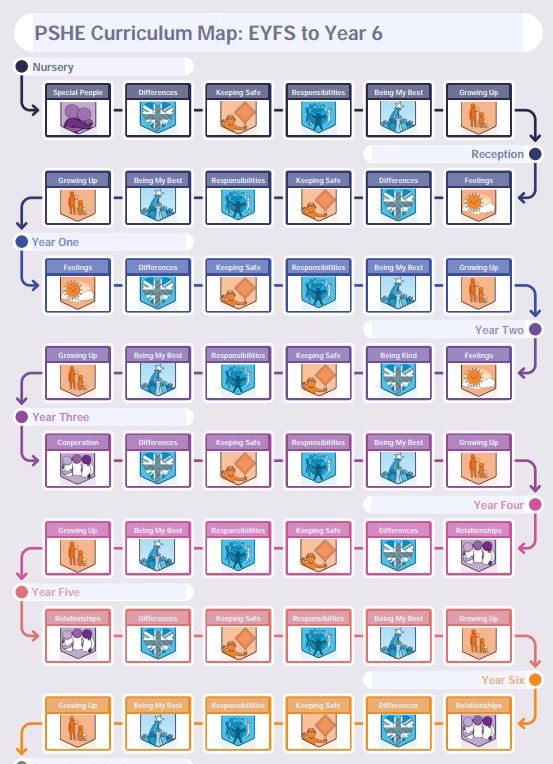
Through delivering a progressive program of teaching and learning, we use a scheme called SCARF that provides a comprehensive spiral curriculum for PSHE education, including mental health and wellbeing. Using SCARF across all age groups will ensure progression in knowledge, attitudes and values, and skills – including the key skills of social and emotional learning, known to improve outcomes for children.
- To encourage children to have the confidence and self-esteem to value themselves and others.
- To develop an understanding of other’s needs, feelings and emotions.
- To provide clear and accurate information about the development of the human body, increasing in age appropriate detail i.e. being able to name parts of the body; describe how their bodies work; being aware and prepared for puberty.
- To teach sensitive subject areas in an atmosphere of openness, encouraging children to be confident to talk, listen and think about their feelings and relationships.
- To promote loving and caring relationships and mutual responsibilities within these relationships, including the importance of family for the care and support of children.
- To understand there is much misleading information gained from the playground, peers, some adults or the media including social media and to therefore know where to obtain accurate information.
- To be able to recognise unsafe situations and be able to protect themselves and ask for help and support.
- Understand our rights and responsibilities.
- To understand and value money and to lay a foundation for responsible money management later in life